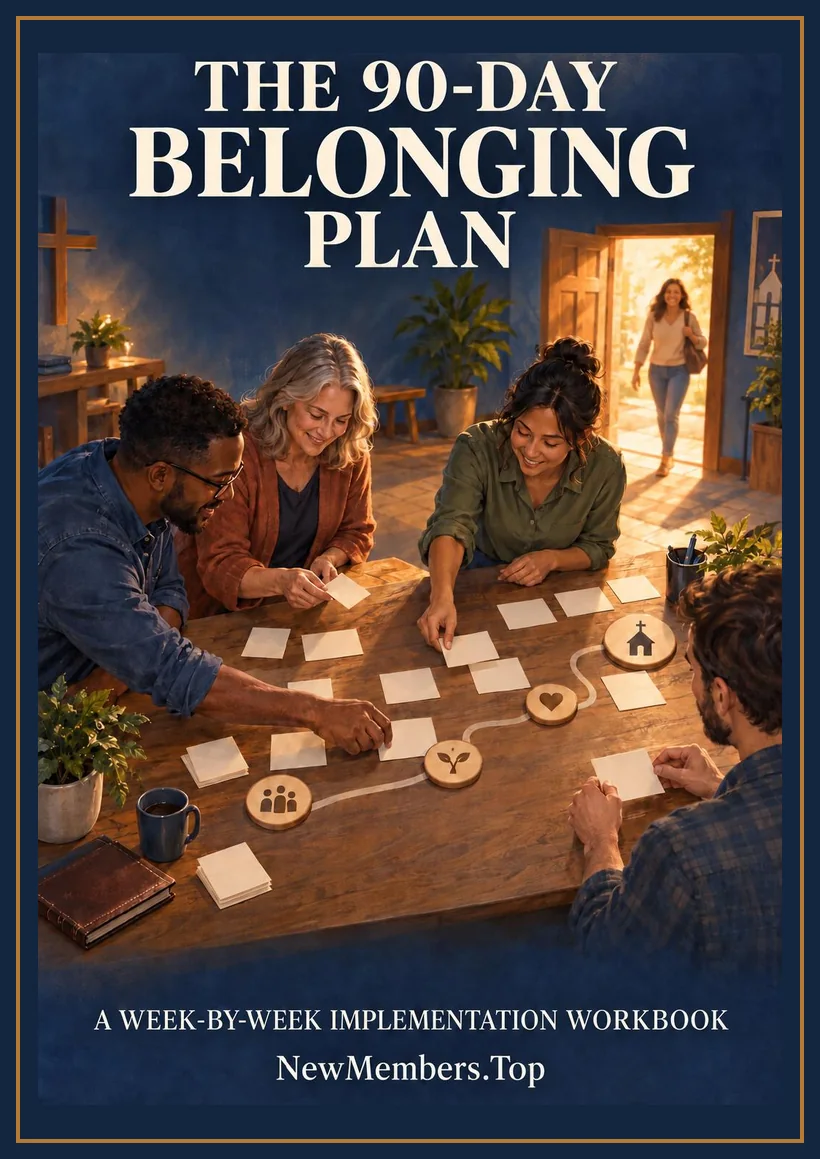
The 90-Day Belonging Plan
64 pages · A 13-week implementation workbook, from an honest diagnosis through follow-up, groups, class, service, and review.
A practical church welcome training collection
Give every first-time guest a clearer path from Sunday welcome to real relationships. The 360-page main guide shows your team what to do; eight practical companions help you put it into action.

After the greeting
Someone can enjoy a service and still leave without a person to call, a group to join, or a way to understand the church. The book helps leaders give those next steps an owner and a gentle invitation.
Module 5 covers asking permission, keeping only useful contact details, and giving follow-up a clear owner.
Module 6 walks through a consent-based first response within 48 hours, including what to say and when to stop.
Modules 8 and 9 turn a group invitation and a steady companion into real relationships, without forcing anyone through a timetable.
A church can greet someone warmly and still lose track of them by Monday. The Belonging Path turns good intentions into a sequence a real team can discuss, assign, and adapt. The books ask leaders to care for people by name while respecting each person’s pace and choice.
The framework inside the main book
Give your whole team one clear path to follow, from the first hello to a meaningful place in church life. The five movements: Welcome · Know · Connect · Commit · Send.
Get the Complete Toolkit →
Your complete welcome toolkit
360 pages · 12 modules · updated field guide and working tools
A 13-week implementation workbook, from an honest diagnosis through follow-up, groups, class, service, and review.
30 difficult welcome situations, with guidance on boundaries, consent, crisis, and when to involve qualified help.
Bonus book · 70 pages · 30 cases
When Belonging Gets Complicated turns 30 real welcome-team situations into guided practice: what to say first, where a volunteer’s role ends, and when to bring in the right person.
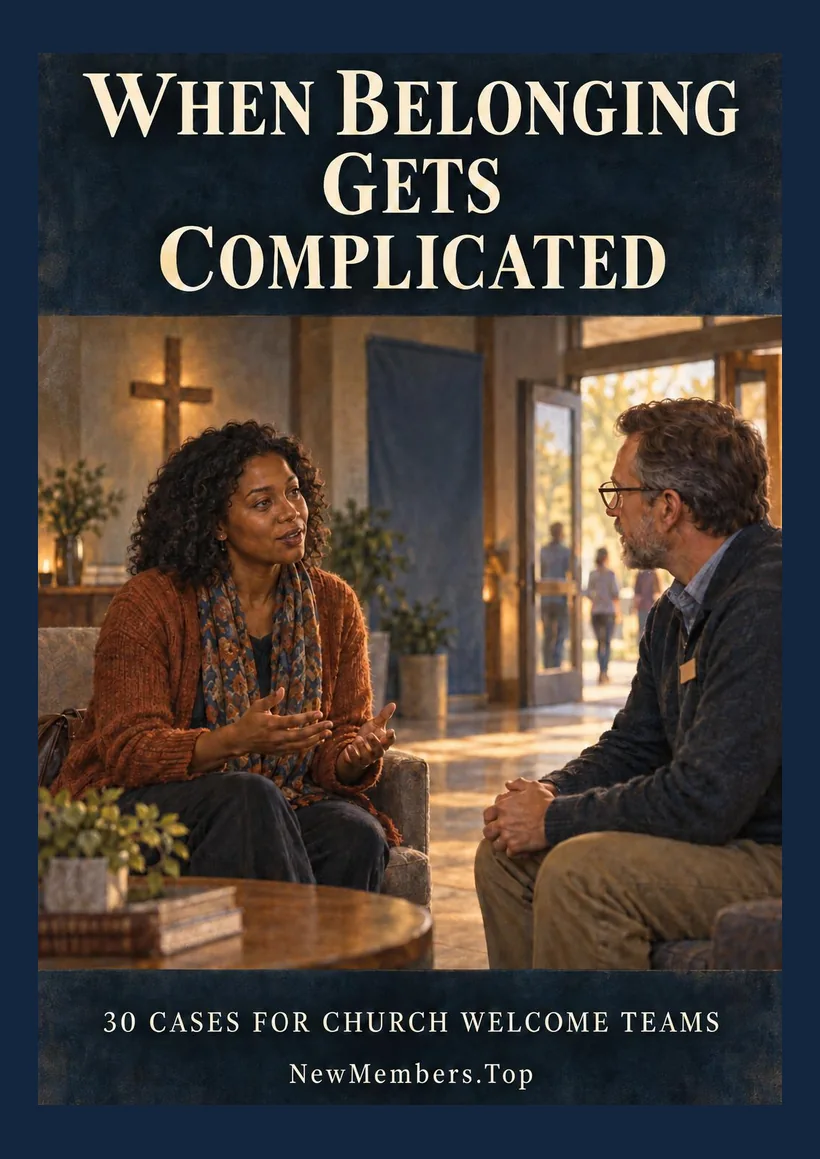
Inside the 70-page companion
Each case gives your team a realistic situation, first words to use, a considered next step, and a mistake to avoid. A case finder helps you reach the right page when a conversation goes somewhere unexpected.
Explore 15 of the 30 situations, across all five parts:
Cases 1–6Hurt, transition & crisis
Cases 7–11Influence & expectations
Cases 12–17Beliefs & membership
Cases 18–23Safety, health & access
Cases 24–30Follow-up & participation
Inside case 26
First words“Thank you for telling me. I will make sure the team respects that.”
Next stepStop outreach and update the contact record so the boundary is visible to the right team members. If the person returns, let them decide whether to reopen contact.
What to avoidNo final persuasive message. No request for a reason.
For immediate danger, abuse, concerns involving a child, or serious mental-health needs, follow your church’s safeguarding policy and local procedures. This book does not replace emergency or professional care.
Inside the 360-page main book
Read a module with your leaders, choose one task for the week, and adapt its timing and roles to your congregation.
The five movements
01 · Why people leave after visiting · 02 · What Scripture says about belonging · 03 · Draw the five-movement path
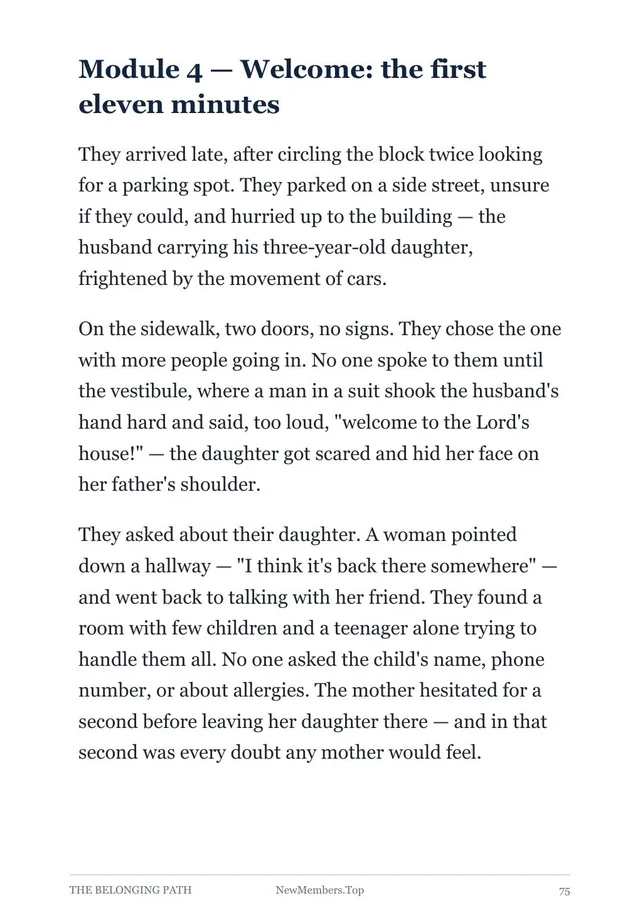
04 · The first eleven minutes · 05 · Registration without shame
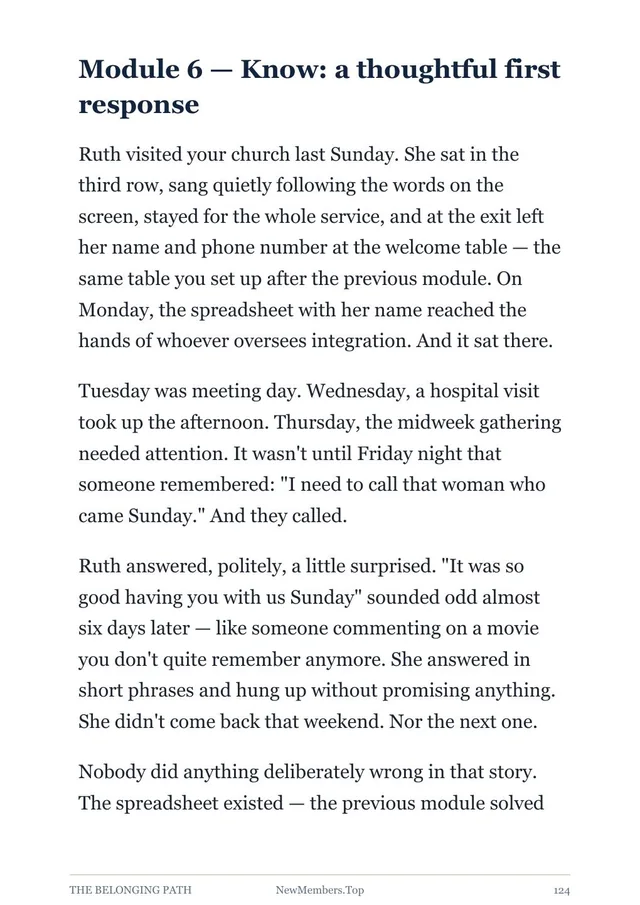
06 · Follow-up within 48 hours · 07 · From conversation to relationship
08 · A group, not just a crowd · 09 · The steady companion
10 · The new members class · 11 · Membership with meaning
12 · A supported first place to serve
Read the real book before deciding
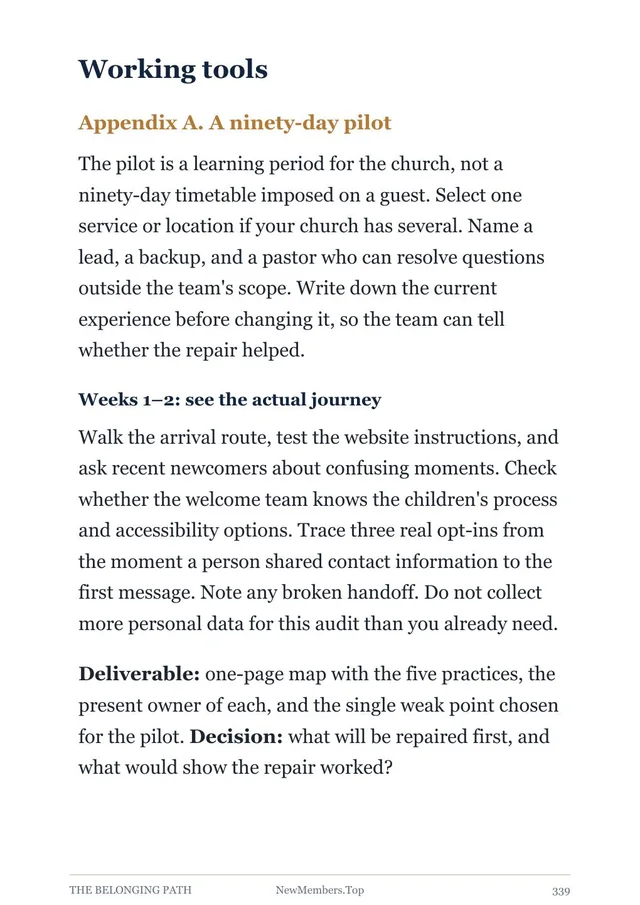
Preview real pages from the main book: the first-visit experience, a thoughtful follow-up, and a practical team exercise.
Who this is for
Use the books together as a team, or start with the part you need most.
Pastors and church leaders who need a path others can share
Welcome and follow-up teams building a humane routine
Small-group leaders who want invitations to become relationships
Churches with few staff or volunteers that need a realistic starting point
Eight complete PDF companions · 307 pages
Eight complete companion books give your team the words, worksheets, class sessions, and weekly steps to put the main guide into practice.
64 pages · A 13-week implementation workbook, from an honest diagnosis through follow-up, groups, class, service, and review.
70 pages · 30 difficult welcome situations, with guidance on boundaries, consent, crisis, and when to involve qualified help.
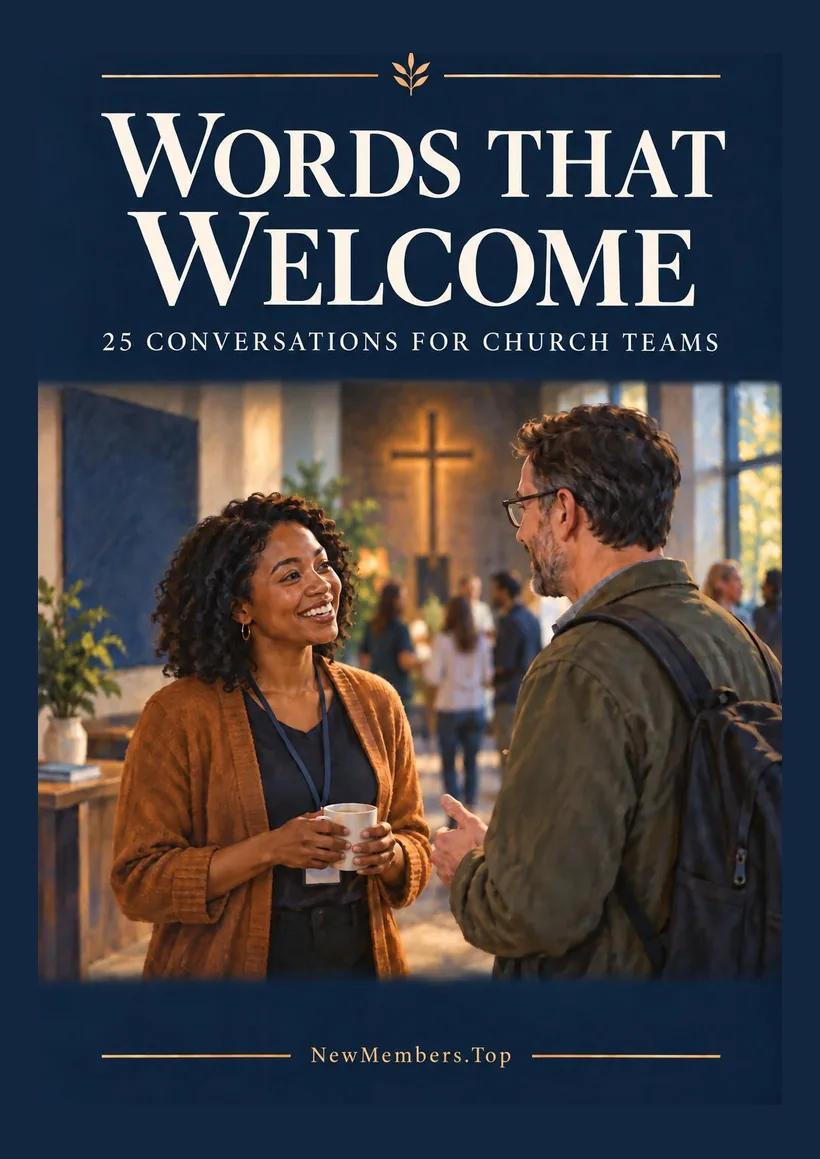
35 pages · 25 adaptable conversations for first contact, coffee, group invitations, membership, serving, and reconnecting.
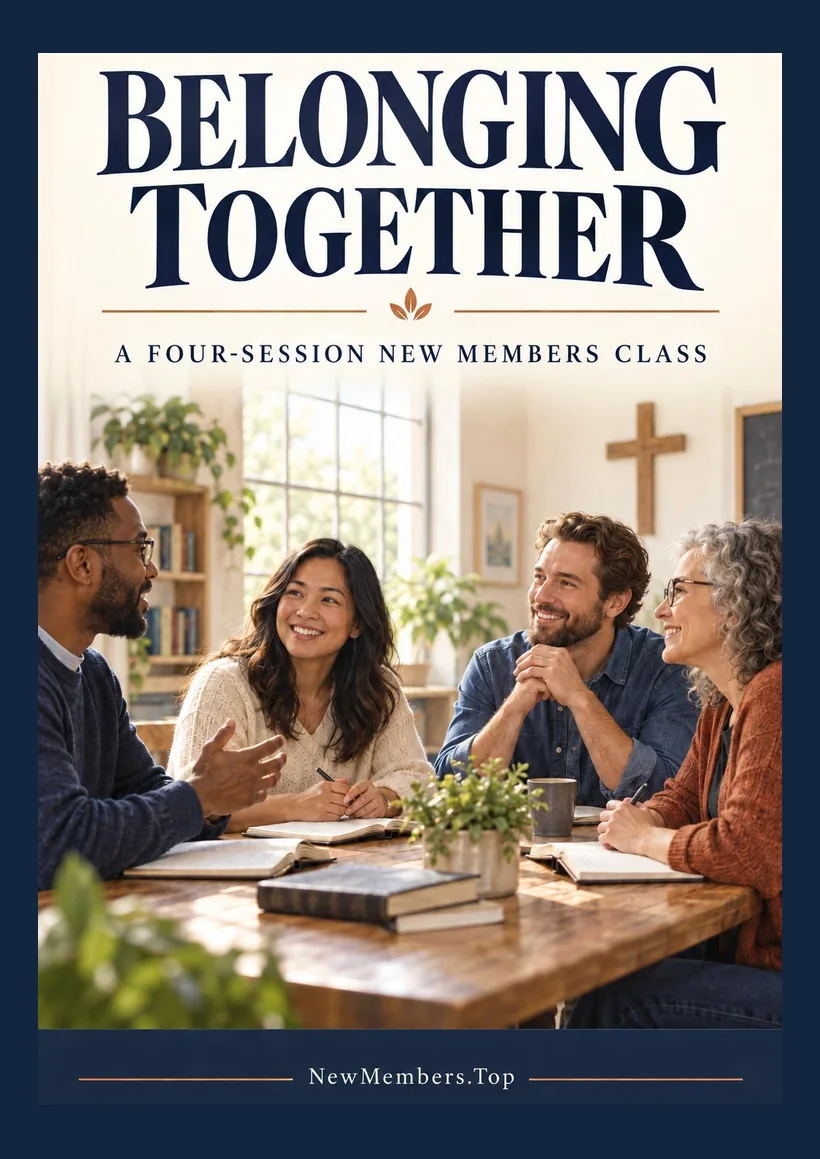
37 pages · A four-session new members class with teaching notes, questions, and a condensed one-day option.
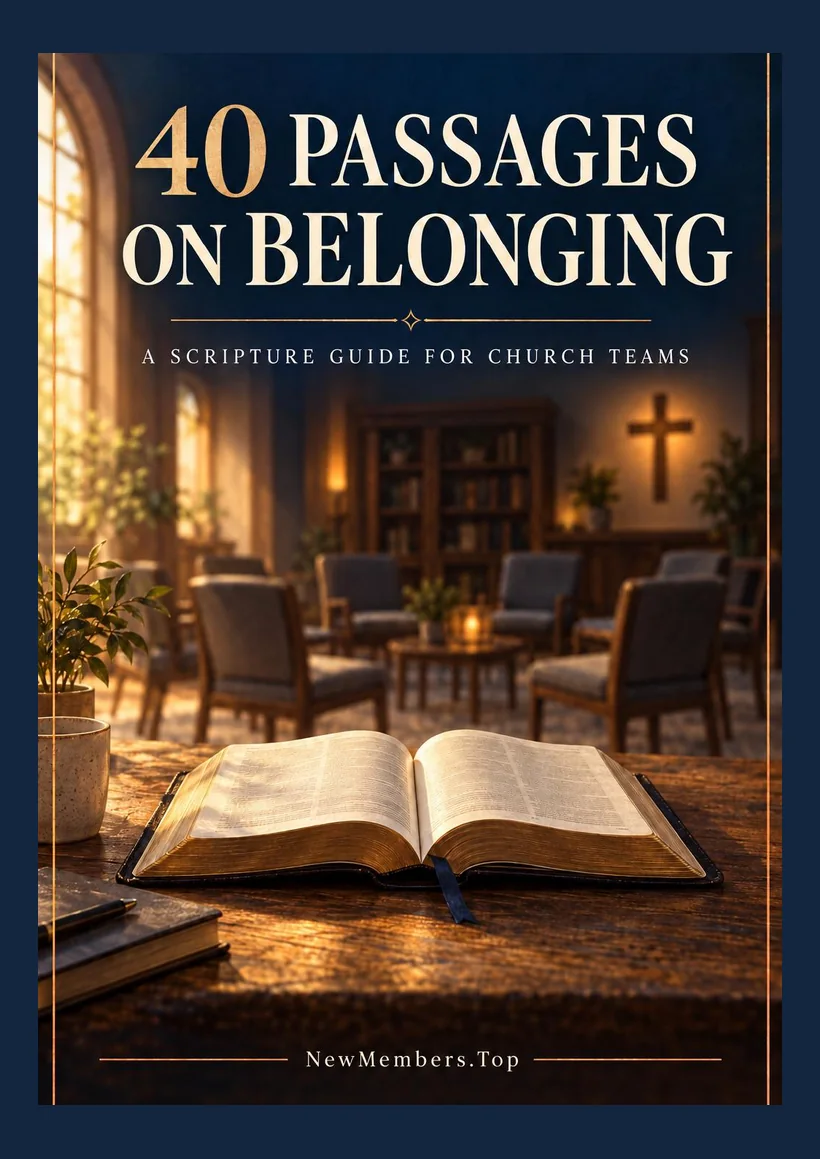
26 pages · A Scripture guide for welcome, shared life, care, service, and teaching in context.
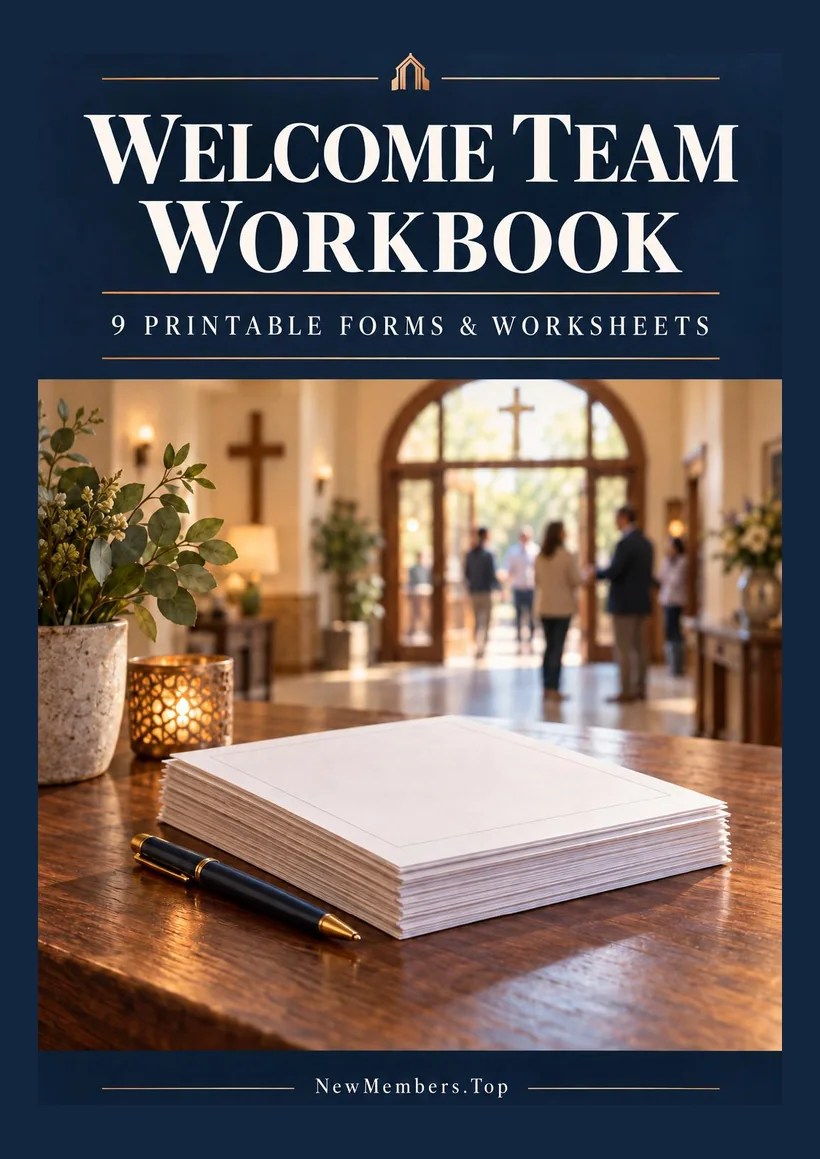
29 pages · Nine printable forms and worksheets, including a contact record, companion pairing, class interest, and monthly review.

24 pages · A 90-day companion guide with a flexible rhythm, sample words, role boundaries, and a reflection page.
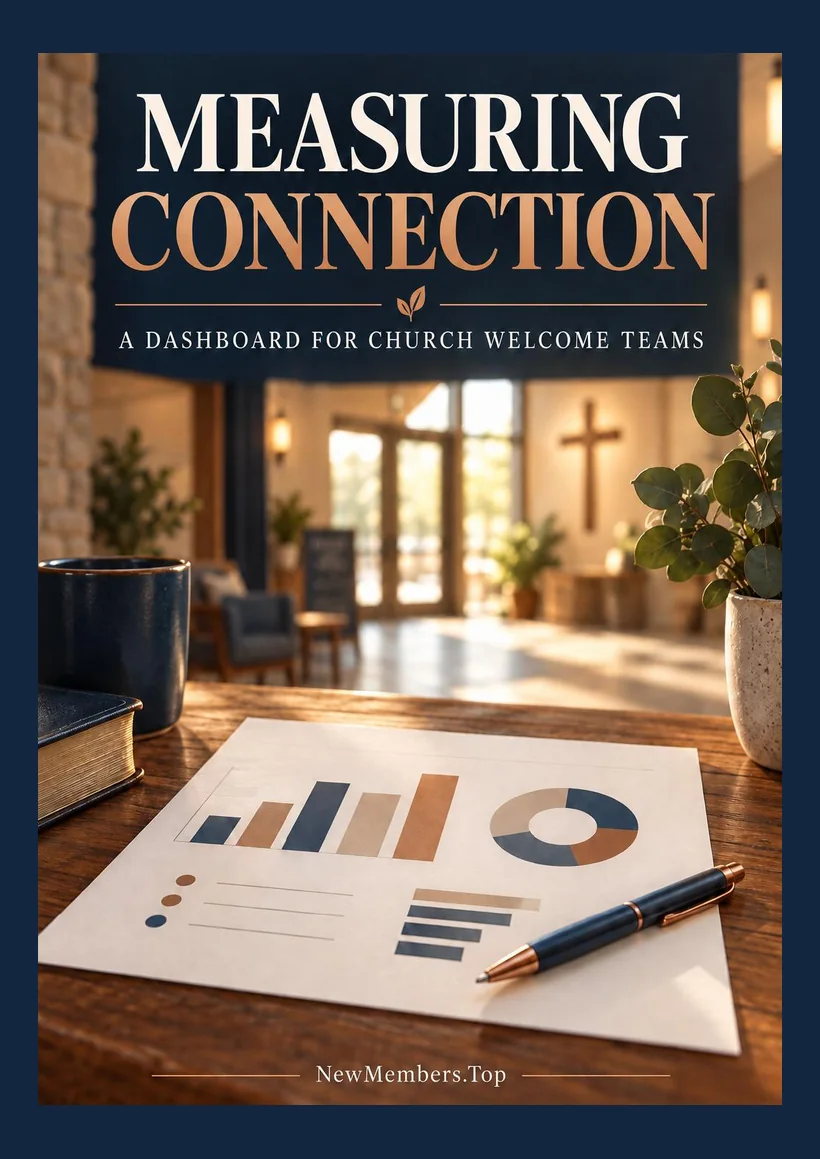
22 pages · Six measures and a monthly review sheet that bring the conversation back to people, not just numbers.
All eight complete companion PDFs are included in one purchase.
Picture the possibilities
Illustrative review mockups supplied by the publisher. These are not verified customer testimonials.
The Welcome, Know, Connect, Commit, and Send framework finally gave our team one shared language. Before this, every ministry was doing something good, but none of the pieces really connected.
The chapter about the ‘back door’ was uncomfortable because I immediately thought of people who came for three or four Sundays and then disappeared. This book helped us see that welcoming people and actually integrating them are two very different things.
The one-page path was probably the most useful exercise for us. We finally wrote down who owns each step instead of assuming ‘someone’ would follow up.
The first eleven minutes section changed what I notice on Sunday mornings. Parking, signage, kids check-in, where someone sits — all the little things regular members stopped seeing years ago.
I loved the distinction between an announcement and an actual invitation. Giving someone a list of small groups isn’t connection. Introducing them to a host who knows they are coming is.
This is a big book and there is a lot to work through, but I actually appreciate that it doesn’t give you another three-page ‘growth hack.’ It makes you examine the entire journey of a newcomer.
The 48-hour follow-up idea is simple, but it exposed a huge weakness for us. We cared about visitors, but ‘sometime this week’ usually meant Thursday, Friday, or never.
The follow-up scripts are especially helpful because they don’t sound like sales scripts. The emphasis is on thanking, listening, and leaving the person free to decide what they want next.
The two-week coffee section may be my favorite part. We were good at getting names and sending texts. We were not nearly as good at actually sitting down and hearing someone’s story.
Nobody belongs to a crowd. That sentence stayed with me. A person can attend every Sunday for months and still have nobody they can text on a Wednesday. This book gives a practical way to change that.
The anchor friend concept is excellent. It gives one ordinary church member a very clear job: know this person, notice when they’re gone, and be available for ninety days. Simple enough to actually do.
I appreciated that the anchor friend is not presented as a mentor or counselor. That makes the role much less intimidating and gives clear boundaries when something needs pastoral or professional care.
We’re a smaller church, so I assumed we didn’t need a system because everybody knows everybody. The book showed me the opposite problem: a newcomer can be noticed by everyone and still never get inside the circle.
Some of the suggested timelines need adjusting for our congregation, but the book says that clearly. What matters is that every promise has an owner and doesn’t just depend on somebody remembering.
The registration section was eye-opening. Our visitor card was basically an application form. We were asking strangers for information we didn’t actually need before we had earned any trust.
The new members class section saved me a lot of work. Four meetings covering faith, our church, membership, and serving gave me a structure I could adapt instead of building everything from scratch.
I especially liked the idea that membership should include what the church promises to the member, not only what the member promises to the church. That shifted the tone of the whole conversation for me.
The Send module corrected something we’ve done for years: seeing a new person and immediately thinking about the volunteer spots we need filled. The book insists on belonging before recruiting, and that makes a lot of sense.
There’s enough material here that I wouldn’t try to implement everything at once. Thankfully the book tells you not to. Starting with one broken handoff made the whole thing feel manageable.
The part that tied everything together for me was seeing yesterday’s newcomer become the person welcoming someone new today. That’s a much better picture of integration than simply getting someone to keep attending.
Put the price in perspective
Separate books on hospitality, membership, discipleship, and care can each help. Buying them one at a time adds up. Here is one four-book example at publisher list prices:
Publisher list prices checked October 14, 2026. Retailer discounts may apply. These are separate products covering related subjects; they are not included in this purchase.
The Belonging Path collection
Give your team the main training, a 90-day plan, 30 difficult cases, 25 conversation scripts, a new members class, and practical companions designed to work together.
Bring the books, scripts, and worksheets to your next team meeting—and start planning a more personal welcome.
The complete collection
Nine complete English PDFs · 667 pages in total.
The eight companion books are included at no additional charge with the main guide.
Get the Complete ToolkitSecure Hotmart checkout · Instant PDF delivery
Seven-day guarantee
Explore the main guide and all eight companion books with your team. If the collection is not right for your church, request a refund through Hotmart within seven days of purchase.
From NewMembers.Top
A church can greet someone warmly and still lose track of them by Monday. The Belonging Path turns good intentions into a sequence a real team can discuss, assign, and adapt. The books ask leaders to care for people by name while respecting each person’s pace and choice.
— NewMembers.Top
The Belonging Path is the 360-page main book. The other eight titles shown above are complete companion PDFs included in the same collection.
The Belonging Path is the current 360-page Expanded Field Edition, built from that source training with a new design and added field workshops and tools. The older source PDF is not delivered in this collection.
Hotmart delivers the complete collection digitally after purchase: one main book and eight companion books, all in English PDF format.
Yes. The main book and the 90-day plan include small-church adaptations. You can begin with a few people, a notebook or spreadsheet, and one agreed next step.
No. The 13-week plan is a schedule for a team to set up and review its welcome practices. People move toward belonging at different paces.
No. The books explain biblical principles and leave local decisions on membership, baptism, and church governance to your leadership and tradition.
Yes. The current editions discuss permission before follow-up, data minimization, volunteer boundaries, minors, and when to involve qualified help. Apply your own local policies and law.
You have seven days after purchase to request a refund through Hotmart. The full terms appear at checkout.
Give your team a clear path from first hello to real belonging. Get the main guide and all eight companions for one payment of $14.99.
Secure Hotmart checkout · Instant PDF delivery